ATS Testing in Upstate SC: What Facility Managers Need to Know
When a power outage occurs, your generator gets most of the attention—but it’s your Automatic Transfer Switch (ATS)that makes backup power possible. The ATS is responsible for sensing a utility power loss and automatically transferring the electrical load to your generator. If it fails, your generator may never engage.
For facilities across Upstate South Carolina, regular ATS testing is not just best practice—it’s essential for NFPA 110 compliance, operational safety, and business continuity.
At PowerChampions of Greenville, we help facility managers, operations leaders, and property teams ensure their ATS systems perform exactly as required when power matters most.
What Is an Automatic Transfer Switch (ATS)?
An Automatic Transfer Switch (ATS) is a critical electrical component that manages the transition between utility power and generator power during an outage.
When utility power fails, the ATS:
- Detects the interruption
- Signals the generator to start
- Transfers the electrical load from the utility to the generator
- Automatically transfers back once utility power is restored
Unlike manual transfer switches, an ATS operates automatically without human intervention, making it essential for facilities with critical loads such as healthcare, manufacturing, data centers, and life-safety systems.
Key ATS Benefits
- Automatic operation during outages
- Rapid, reliable power transfer
- No manual action required
- Reduced downtime for critical systems
Key Components of an ATS
Understanding how an ATS works helps explain why regular testing and service are required.
Electrical Contacts
Electrical contacts create the connection between power sources and loads. Over time, contacts can wear, loosen, or corrode—leading to failed transfers if not inspected and maintained.
Switching Mechanism
The switching mechanism physically transfers the load. There are two primary types:
- Open Transition
Disconnects utility power before connecting generator power, resulting in a brief interruption. - Closed Transition
Briefly parallels utility and generator power to minimize interruption.
If synchronization parameters aren’t met, the system reverts to an open transition.
Control & Transfer Circuits
These circuits monitor voltage, frequency, and power quality. They determine when to start the generator and initiate load transfer.
Mechanical Components
Manual handles, motors, and linkages allow for manual operation during emergencies and must be kept clean, lubricated, and functional.
How an ATS Works During a Power Outage
When utility power fails, the ATS automatically:
- Detects voltage loss
- Signals the generator to start
- Transfers the load to generator power
- Monitors utility restoration
- Transfers load back once stable power returns
This automated sequence keeps critical systems operational in:
- Hospitals and healthcare facilities
- Manufacturing plants
- Data centers
- Commercial and municipal buildings
Why Regular ATS Testing Is Critical
Routine ATS service in Greenville, SC ensures your system will perform under real-world conditions—not just on paper.
Preventing Downtime
Minor issues like loose connections or delayed transfer timing can cause major failures during outages. Testing identifies problems before they become emergencies.
Improving Reliability
Regular inspections confirm switching mechanisms, controls, and sensors are functioning correctly—ensuring consistent, predictable operation.
Extending ATS Lifespan
Preventive maintenance reduces wear and tear, helping your ATS last longer and perform more reliably over time.
Important Safety Note:
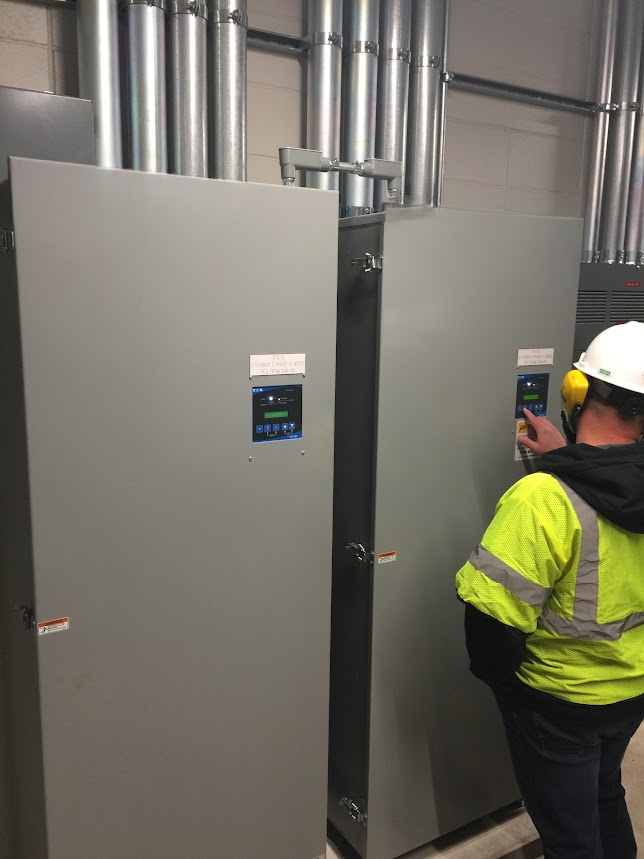
Opening an ATS cabinet requires full PPE and proper electrical safety procedures. If your team is not trained for ATS service, professional testing is strongly recommended.
Visual Inspections & Cleaning
Routine visual inspections are a foundational part of ATS maintenance.
Signs of Wear or Damage
- Loose or discolored connections
- Signs of overheating
- Corrosion or debris buildup
Cleaning the ATS
Dust and contaminants can interfere with performance. Cleaning should follow manufacturer guidelines using appropriate tools and materials.
Lubrication
Moving mechanical components should be lubricated per specifications to ensure smooth operation.
Electrical Testing & Battery Maintenance
Electrical Testing
ATS testing should include:
- Voltage verification
- Simulated power outage transfer tests
- Time-delay confirmation
- Load transfer accuracy
Battery Maintenance
The ATS control system relies on batteries. Regular checks should include:
- Voltage testing
- Terminal inspection
- Corrosion prevention
Mechanical Testing & Calibration
Mechanical Testing
Manual operation and under-load testing help identify:
- Binding or resistance
- Failing relays or coils
- Micro-switch issues
Calibration
Over time, ATS settings can drift. Calibration ensures:
- Accurate response times
- Proper synchronization
- Manufacturer-specified performance
If irregularities are found, professional calibration is required.
Professional Inspection, NFPA 110 & Documentation
Why Professional ATS Inspections Matter
Annual professional inspection helps confirm:
- NFPA 110 compliance
- Proper load transfer performance
- Internal component condition
- System readiness for audits or inspections
Documentation Is Critical
Maintaining detailed service records supports:
- Code compliance
- Internal audits
- Warranty claims
- Risk management and insurance requirements
Trusted ATS Service in Greenville, SC
ATS systems are not “set it and forget it” equipment. They require regular testing, professional oversight, and clear documentation to ensure they perform when it matters most.
PowerChampions of Greenville provides trusted ATS service in Greenville, SC, helping Upstate facilities maintain NFPA 110 compliance, reduce risk, and protect operations.
Need ATS testing or compliance support?
Contact PowerChampions of Greenville to schedule ATS service or speak with a local expert about your facility’s backup power system.
.png)
.png)
-1.png)
.png)