A Guide to Backup Power Systems for Industrial Facilities
What Backup Power System Does an Industrial Facility Need?
The backup power system an industrial facility needs depends on its critical loads, operational requirements, outage risk, and business continuity objectives.
For industrial facilities throughout Greenville and the Upstate of South Carolina, reliable backup power has become increasingly important. The region continues to experience significant growth in manufacturing, logistics, healthcare, and commercial development, placing greater demand on electrical infrastructure.
Whether supporting production equipment, critical communications, environmental controls, or life-safety systems, industrial organizations depend on backup power to maintain operations when utility service becomes unavailable.
What You'll Learn in This Guide
In this guide, we'll cover:
- Why industrial backup power matters
- How to identify critical loads
- Generator sizing best practices
- Common backup power system configurations
- Generator redundancy strategies
- Automatic transfer switches (ATS)
- Fuel planning and fuel reliability
- Load bank testing
- Proactive maintenance programs
- NFPA 110 considerations
- Outage planning and emergency preparedness
- Common backup power mistakes
- Long-term backup power lifecycle management
Why Industrial Backup Power Matters
Modern industrial facilities rely on electricity for virtually every aspect of daily operations.
Production equipment, process controls, automation systems, communications infrastructure, HVAC systems, security systems, and life safety equipment all depend on reliable power. When utility power fails, the consequences can be immediate and costly.
Potential impacts include:
- Lost production
- Product spoilage
- Equipment damage
- Missed customer deadlines
- Safety concerns
- Supply chain disruptions
- Regulatory compliance issues
- Revenue losses
In Greenville and throughout the Upstate, facilities face a variety of outage risks, including severe thunderstorms, high winds, equipment failures, and growing electrical demand. A properly designed backup power system helps reduce these risks and improve resilience.
Understanding Critical Loads
Every successful backup power strategy begins with a critical load assessment.
Many facilities mistakenly assume every electrical load must remain operational during an outage. In reality, most facilities prioritize specific systems that are essential to safety and operations.
Critical loads often include:
- Production equipment
- Process controls
- Emergency lighting
- Fire protection systems
- Communications equipment
- Data infrastructure
- Security systems
- Environmental controls
- Fuel transfer systems
Facilities generally classify loads into categories:
Life Safety Loads
These systems support occupant safety and emergency response.
Examples include:
- Emergency lighting
- Fire alarms
- Smoke control systems
- Exit signage
Operational Loads
These systems maintain essential business functions.
Examples include:
- Production equipment
- Automation systems
- Process controls
- Communications systems
Convenience Loads
These systems are beneficial but not essential during an outage.
Examples include:
- Office equipment
- Nonessential HVAC zones
- Break room equipment
Properly identifying critical loads helps ensure generators are sized appropriately and resources are allocated effectively.
Generator Sizing for Industrial Facilities
Generator sizing is one of the most important decisions in backup power planning.
An undersized generator may fail during peak demand conditions. An oversized generator may increase capital costs and reduce efficiency.
Running Load Requirements
The generator must support the continuous electrical demand of all critical systems expected to operate during an outage.
Motor Starting Requirements
Industrial facilities often contain:
- Pumps
- Compressors
- Conveyors
- Fans
- HVAC equipment
These loads can require significantly higher power during startup.
Future Expansion
Facilities throughout Greenville often experience evolving power requirements as operations expand. Generator sizing should account not only for current loads but also for future growth plans to avoid costly upgrades as facility demands increase.
Environmental Conditions
Generator output can be affected by:
- High temperatures
- Altitude
- Humidity
- Site-specific operating conditions
Professional Load Analysis
Accurate sizing typically requires a detailed load study that evaluates both current and anticipated electrical demands. The goal is to balance reliability, performance, and long-term cost efficiency.
Types of Industrial Backup Power Systems
Industrial facilities use several different backup power configurations.
Standby Generator Systems
These are the most common industrial backup power solutions. A standby generator automatically starts when utility power fails and supplies electricity until utility service returns.
Prime Power Systems
Prime power generators operate as a primary source of electricity where utility power is limited or unavailable.
Parallel Generator Systems
Multiple generators operate together to support facility loads.
Benefits include:
- Scalability
- Increased reliability
- Improved maintenance flexibility
- Greater redundancy
Distributed Backup Power Systems
Instead of one large generator, multiple generators support different facility areas. This approach can improve resilience and operational flexibility.
Diesel vs. Natural Gas Generators
Generator fuel selection is a critical design decision.
Diesel Generators
Advantages:
- Fast response times
- High reliability
- Excellent load acceptance
- Widely used in industrial environments
Considerations:
- Fuel storage requirements
- Fuel quality management
- Emissions considerations
Natural Gas Generators
Advantages:
- Continuous fuel supply through utility infrastructure
- Reduced fuel storage needs
- Lower emissions
Considerations:
- Dependence on gas utility infrastructure
- Potential fuel supply interruptions during major events
The best choice depends on operational requirements, site conditions, regulatory considerations, and resilience objectives.
Generator Redundancy Strategies
For some facilities, generator failure is not an option. Redundancy provides an additional layer of protection.
N Configuration
One generator supports the required load.
N+1 Configuration
An additional generator provides backup capacity. This is one of the most common approaches for critical operations.
2N Configuration
A complete duplicate backup power system exists. This approach is often used in highly critical environments.
Parallel Redundant Systems
Multiple generators share facility loads while providing backup capacity if one unit becomes unavailable.
Facilities commonly using redundancy include:
- Data centers
- Utilities
- Water treatment facilities
- Pharmaceutical manufacturers
- Telecommunications providers
- Large manufacturing operations
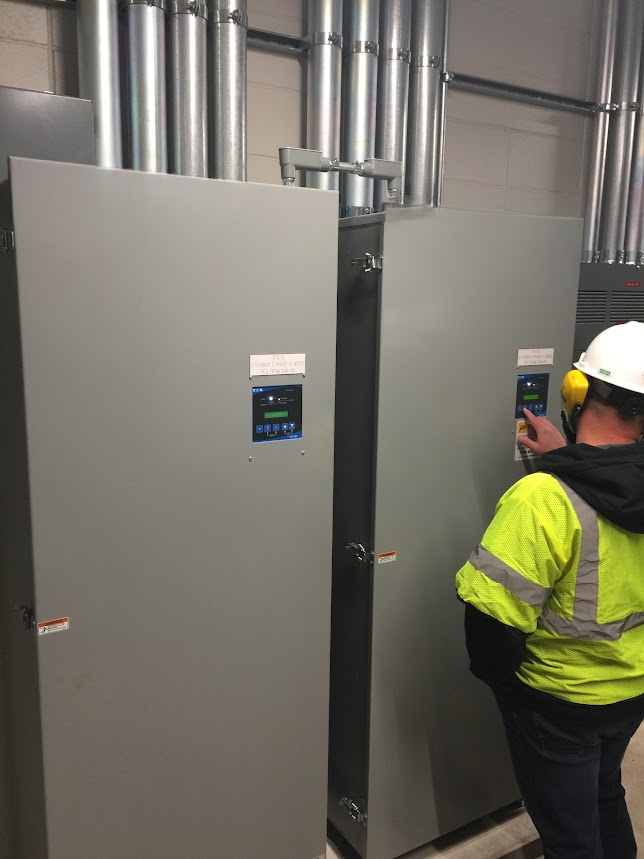
Automatic Transfer Switches (ATS)
Generators cannot function automatically without transfer equipment. An ATS monitors utility power and transfers electrical loads to generator power when necessary.
Key functions include:
- Utility power monitoring
- Generator startup initiation
- Load transfer
- Power source isolation
- Utility restoration detection
- Return-to-normal operations
ATS reliability is essential because transfer failures can prevent backup power from reaching critical equipment. Routine inspection and testing are necessary to ensure proper operation.
Fuel Strategy and Fuel Reliability
A backup power system is only as reliable as its fuel supply.
For Upstate South Carolina businesses, fuel planning should be considered part of overall emergency preparedness. Extended outages following severe weather events can place additional pressure on fuel supply chains, making proactive fuel management and supplier relationships especially important.
Fuel Storage Planning
Facilities should determine how long operations must continue during an outage.
Common planning targets include:
- 24 hours
- 48 hours
- 72 hours
- Multiple days for critical operations
Fuel Quality Management
Diesel fuel can degrade due to:
- Water contamination
- Microbial growth
- Sediment buildup
- Oxidation
Regular testing helps identify issues before they affect generator performance.
Fuel Supplier Agreements
Establishing supplier relationships before emergencies occur improves fuel availability during widespread outages.
Fuel System Inspections
Routine inspections should include:
- Tanks
- Pumps
- Piping
- Valves
- Monitoring systems
Fuel reliability should be treated as a critical component of overall power reliability.
Load Bank Testing
Generators are designed to perform under load. Unfortunately, many standby generators spend most of their life waiting for an emergency. Load bank testing applies a controlled electrical load to verify system performance.
Benefits include:
- Confirming generator capacity
- Identifying performance issues
- Verifying cooling system operation
- Testing exhaust systems
- Reducing wet stacking
- Validating readiness
Load bank testing provides valuable information that may not be revealed during routine no-load exercise cycles. For critical facilities, it is one of the most important reliability practices available.
Proactive Maintenance Programs
Reliable backup power systems require ongoing attention. Waiting for problems to appear often leads to expensive emergency repairs and increased downtime risk.
A proactive maintenance program typically includes:
- Visual inspections
- Battery testing
- Fluid analysis
- Cooling system inspections
- Fuel system evaluations
- ATS testing
- Control system verification
- Load bank testing
- Documentation review
Benefits include:
- Improved reliability
- Reduced failure risk
- Extended equipment life
- Better emergency readiness
- Lower lifecycle costs
Proactive maintenance is one of the most effective tools for improving backup power reliability.
NFPA 110 Considerations
NFPA 110 provides important guidance for emergency and standby power systems.
The standard addresses:
- Inspection requirements
- Maintenance procedures
- Operational testing
- Documentation
- Performance expectations
- Reliability considerations
Many organizations use NFPA 110 as a framework for building strong backup power programs.
While requirements vary by facility type and jurisdiction, the principles of regular testing, documentation, and operational readiness are broadly applicable. Working with experienced backup power professionals helps facilities understand applicable requirements and best practices.
Outage Planning and Emergency Preparedness
Businesses throughout Greenville and the Upstate should regularly review their outage response plans. As facilities grow and operational requirements change, emergency procedures, fuel strategies, and critical load priorities should be updated to reflect current conditions.
Emergency Contacts
Maintain current contact information for:
- Service providers
- Fuel suppliers
- Utility companies
- Facility leadership
Communication Procedures
Establish internal and external communication protocols.
Fuel Contingency Plans
Develop backup strategies for extended outages.
Equipment Prioritization
Identify which systems receive priority during emergency conditions.
Recovery Procedures
Document the process for returning operations to normal once utility power is restored.
Prepared facilities respond more effectively and recover more quickly.
Common Causes of Generator Failure
Many backup power failures are preventable.
Common causes include:
- Battery failures
- Fuel contamination
- Cooling system issues
- Deferred maintenance
- Improper sizing
- ATS failures
- Lack of testing
- Operator error
Understanding these risks helps facilities implement strategies that improve reliability.
Common Backup Power Mistakes
Industrial facilities frequently encounter avoidable reliability issues.
Examples include:
- Underestimating load requirements
- Ignoring future growth
- Inadequate fuel planning
- Delayed maintenance
- Lack of load bank testing
- Poor documentation
- Failure to test ATS equipment
- Insufficient redundancy
- Incomplete outage response plans
Addressing these issues proactively can significantly improve readiness.
Backup Power Lifecycle Planning
Backup power systems should be viewed as long-term assets. Lifecycle planning helps facilities maximize reliability and return on investment.
Key considerations include:
- Equipment age
- Maintenance history
- Fuel system condition
- Control system upgrades
- ATS modernization
- Capacity requirements
- Regulatory changes
Regular evaluations help determine when upgrades or replacements are appropriate.
Building a Reliable Industrial Backup Power Program
Reliable backup power requires more than purchasing a generator.
It requires a comprehensive strategy that includes:
- Proper generator sizing
- Critical load analysis
- Redundancy planning
- ATS reliability
- Fuel management
- Load bank testing
- Proactive maintenance
- NFPA 110 best practices
- Outage preparedness
Facilities that invest in these areas are better positioned to reduce downtime, protect operations, improve safety, and maintain business continuity during utility power interruptions. The most successful organizations treat backup power as an ongoing reliability initiative rather than a one-time equipment purchase.
Frequently Asked Questions
What backup power system does an industrial facility need?
Most industrial facilities require a standby generator, an automatic transfer switch, fuel infrastructure, and a proactive maintenance program. Critical facilities may also require redundancy.
How do you determine the correct generator size?
Generator sizing is based on critical loads, starting loads, future expansion plans, and operating conditions.
Why is load bank testing important?
Load bank testing verifies generator performance under controlled conditions and helps identify problems before an actual outage.
How often should industrial generators be maintained?
Maintenance schedules vary, but routine inspections, testing, and proactive service are essential throughout the year.
Why is fuel quality important?
Fuel contamination and degradation are common causes of generator failures. Regular fuel testing helps improve reliability.
Does NFPA 110 apply to industrial facilities?
Many industrial facilities use NFPA 110 guidance to improve emergency power system reliability, testing, maintenance, and documentation.
What are the most common causes of generator failure?
Battery failures, fuel issues, cooling system problems, deferred maintenance, and transfer switch failures are among the most common causes.
How can facilities improve backup power reliability?
Proper sizing, proactive maintenance, load bank testing, fuel management, redundancy planning, and outage preparedness all contribute to improved reliability.
.png)
-1.png)
.png)
.png)