Critical Power System Inspections: What Facility Managers Should Expect
Your backup power system exists for one purpose: to keep your facility operating when utility power fails. Yet most emergency power systems spend the majority of their lives waiting for an outage. Because they operate infrequently, problems can develop slowly and remain unnoticed until the system is needed most.
That's why routine inspections are one of the most valuable investments a facility manager can make. Rather than simply confirming that a generator starts, a comprehensive inspection evaluates the condition of the entire Emergency Power Supply System (EPSS).
It identifies developing issues before they become failures, extends equipment life, reduces emergency repair costs, and helps ensure every major component is ready to perform. A successful inspection isn't about checking a box. It's about reducing risk and improving confidence in your facility's ability to operate during an unexpected outage.
A Backup Power System Is More Than a Generator
One of the most common misconceptions is that a backup power inspection focuses only on the generator. While the generator is certainly a critical component, it represents only one part of a much larger system.
A commercial backup power system typically includes the generator, automatic transfer switch, batteries, battery charger, fuel system, cooling system, engine controls, electrical distribution equipment, and numerous sensors and protective devices. Every one of these components must function properly for the system to perform as intended.
If a battery fails, the generator may never start. If the ATS doesn't transfer, the facility may never receive power. If contaminated fuel clogs filters during a prolonged outage, the generator may shut down prematurely. Inspecting the complete system, not just the engine, is what provides true confidence in reliability.
Inspecting the Generator
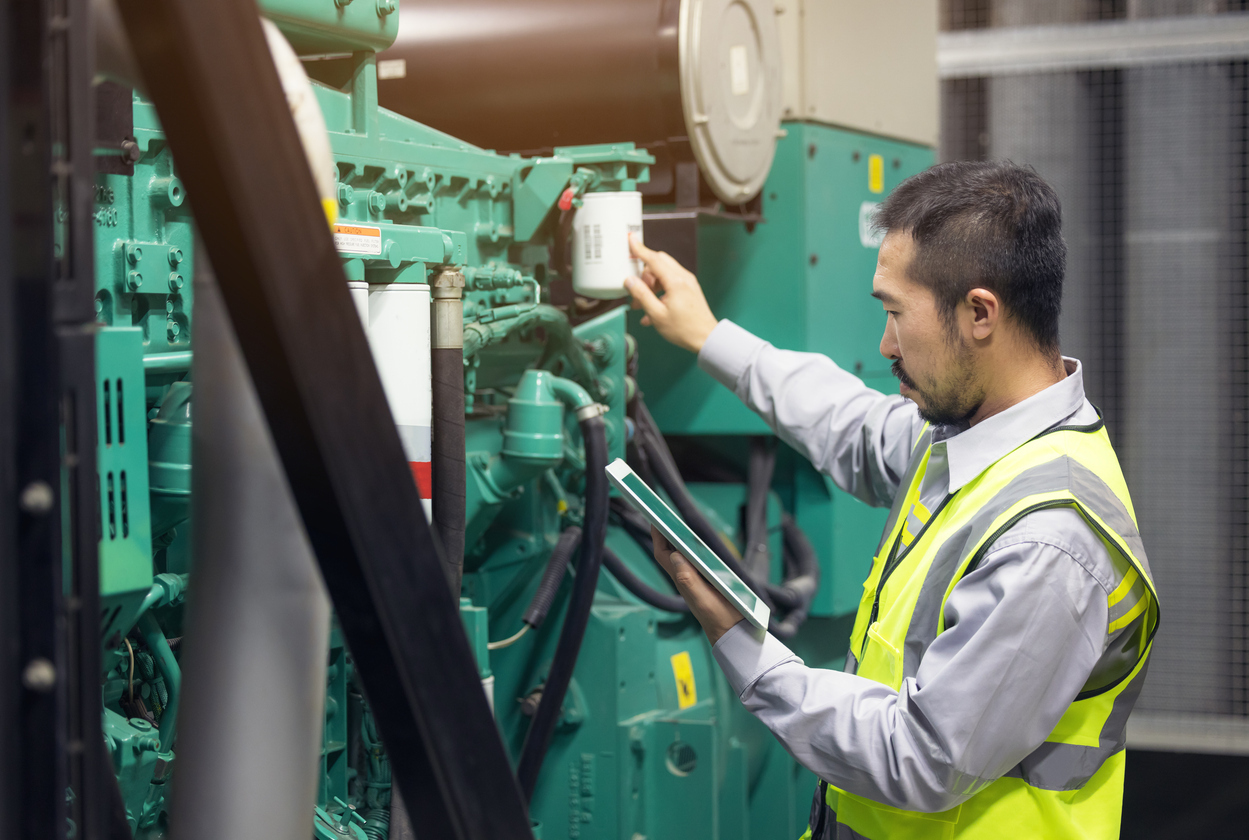
The inspection usually begins with a thorough evaluation of the generator itself. Technicians examine the engine for signs of wear, fluid leaks, loose hardware, damaged belts, deteriorating hoses, and abnormal vibration. Oil and coolant levels are checked, filters are inspected, and the overall condition of the unit is evaluated.
Although many of these items appear minor, they often provide early warning signs of developing mechanical problems. Addressing a small coolant leak or replacing a worn belt during scheduled maintenance is far easier than responding to an unexpected failure during an emergency.
A well-maintained generator is more likely to operate reliably during both short outages and extended runtime events.
Evaluating the Automatic Transfer Switch
The automatic transfer switch is one of the most important, and most overlooked, components in any backup power system.
Its job is to detect the loss of utility power, signal the generator to start, and safely transfer electrical loads from utility power to emergency power. Once utility power returns, the ATS manages the transfer back to normal operation.
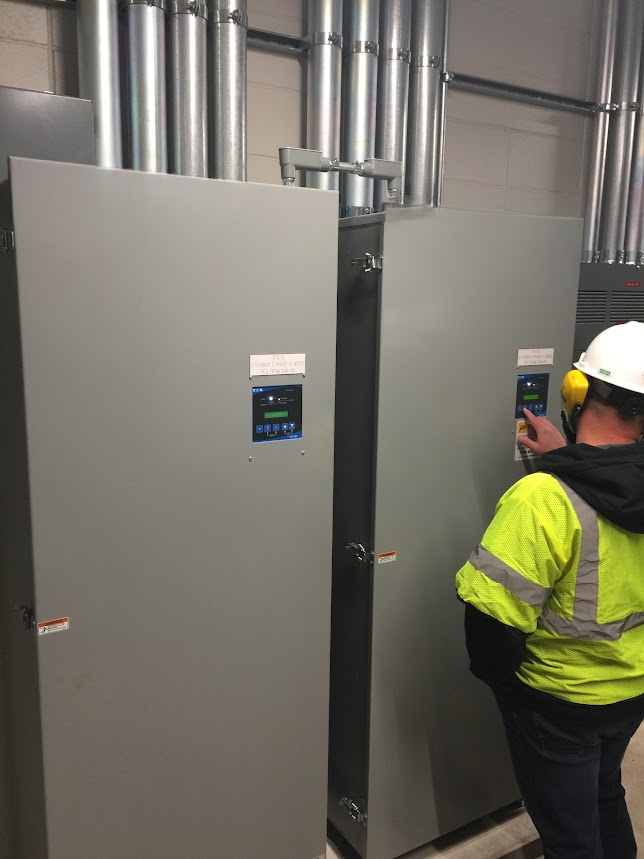
During an inspection, technicians evaluate the physical condition of the switch, inspect electrical connections, review controller diagnostics, and verify that moving components show no signs of excessive wear. Any stored alarms or fault history are also reviewed to identify potential concerns.
Even a perfectly functioning generator cannot supply power to the facility if the transfer switch fails to operate correctly.
Batteries: A Small Component With a Big Job
Generator batteries receive relatively little attention until they fail.
Because they remain on standby for long periods, batteries naturally degrade over time. Corrosion on terminals, weak charging systems, loose connections, and age-related deterioration can all reduce starting reliability.
During an inspection, technicians verify battery condition, charging performance, terminal cleanliness, cable integrity, and overall system health. These simple checks often prevent one of the most common causes of generator failures.
Reliable backup power always begins with a reliable starting system.
Fuel System Inspection
Fuel quality is just as important as fuel quantity.
Many facilities maintain enough diesel fuel for extended operation, but contaminated fuel can create significant reliability problems. Water intrusion, microbial growth, deteriorating fuel quality, clogged filters, and aging storage tanks can all affect generator performance.
A comprehensive inspection evaluates fuel tanks, transfer equipment, filters, visible piping, and any signs of leakage or contamination. If necessary, additional fuel testing may be recommended to verify fuel quality.
For facilities planning for multi-day outages, maintaining clean fuel is essential to long-term reliability.
Cooling System Evaluation
Backup generators produce a significant amount of heat while operating under load. Without a properly functioning cooling system, even a healthy engine can quickly overheat.
Technicians inspect coolant levels, hoses, radiator condition, fan belts, cooling fans, and airflow through the radiator. Particular attention is given to signs of leaks, deterioration, or blockages that could reduce cooling efficiency.
These inspections become especially important in the Southeast, where high ambient temperatures place additional stress on cooling systems during summer outages.
Electrical Connections and Controls
Electrical systems experience years of vibration, heating, and cooling cycles. Over time, those conditions can loosen connections or create excessive resistance that generates unwanted heat.
During an inspection, technicians evaluate wiring, grounding, electrical terminals, control panels, sensors, and protective devices for signs of wear or damage.
Modern generator controllers also provide valuable diagnostic information. Reviewing stored alarms, operating history, and fault logs can reveal developing issues long before they affect system performance.
Load Testing Completes the Picture
A generator that starts successfully isn't necessarily ready to support your facility. Load testing verifies that the generator can produce its rated electrical output while maintaining proper voltage, frequency, cooling performance, and engine operation under realistic conditions.
For many facilities, periodic load testing provides an additional level of confidence that routine exercise alone cannot provide. It confirms that the generator can perform under the demands it will experience during an actual outage.
Common Problems Found During Inspections
Routine inspections frequently uncover issues that have not yet caused operational problems but could eventually lead to equipment failure. Weak batteries, deteriorating belts, loose electrical connections, low coolant levels, dirty filters, fuel contamination, charger failures, minor fluid leaks, and ATS abnormalities are among the most common findings.
The advantage of discovering these issues during scheduled maintenance is that repairs can be planned instead of becoming emergency service calls. In most cases, correcting a developing problem early is significantly less expensive than responding after equipment fails.
Why Documentation Is Just as Important
A thorough inspection doesn't end when the technician leaves the site.
Detailed inspection reports provide facility managers with valuable information about equipment condition, completed maintenance, recommended repairs, operating hours, and long-term trends. Over time, this documentation creates a maintenance history that helps identify recurring issues, prioritize capital improvements, and make informed operational decisions.
Good documentation transforms maintenance from a reactive activity into a proactive management strategy.
How Often Should Critical Power Systems Be Inspected?
Inspection frequency depends on several factors, including the type of facility, manufacturer recommendations, operating environment, and applicable regulatory requirements.
Facilities such as hospitals, data centers, manufacturers, and other mission-critical operations often require more frequent inspections because the consequences of a backup power failure are significantly higher.
Rather than relying on a one-size-fits-all schedule, facilities should work with an experienced critical power provider to develop an inspection program based on their operational needs and level of risk.
Building Confidence Before the Outage
The true value of a critical power system inspection isn't simply identifying problems. It's building confidence that every component of the backup power system will perform when utility power is lost.
By evaluating the generator, automatic transfer switch, batteries, fuel system, cooling system, controls, and supporting equipment as a complete system, inspections help reduce risk, improve reliability, and extend equipment life.
When an outage occurs, there is little opportunity to troubleshoot or make repairs. The work that determines whether your facility stays operational has already been done through consistent inspections and proactive maintenance.
For organizations that depend on continuous operations, routine critical power system inspections are one of the smartest investments they can make in long-term business continuity. See how Power Champions can help: https://www.greenville.power-champions.com/load-bank-testing
Frequently Asked Questions
What is included in a critical power system inspection?
A comprehensive inspection evaluates the generator, automatic transfer switch, batteries, battery charger, fuel system, cooling system, controls, electrical connections, and other supporting components that make up the Emergency Power Supply System.
How often should commercial backup power systems be inspected?
Inspection frequency varies depending on the facility, equipment, manufacturer recommendations, and regulatory requirements. Mission-critical facilities typically require more frequent inspections to maintain a high level of reliability.
Is starting the generator enough to know the system is ready?
No. A successful start only confirms that the engine runs. A complete inspection verifies that the entire backup power system, including the ATS, batteries, fuel system, and controls, is capable of supporting the facility during an outage.
Why are maintenance reports important?
Inspection reports document equipment condition, maintenance history, recommended repairs, and long-term trends. This information helps facility managers make informed maintenance and budgeting decisions while improving overall system reliability.
What component is most often overlooked?
The automatic transfer switch is one of the most overlooked components in a backup power system. Without a properly functioning ATS, power cannot be transferred to the facility, even if the generator operates normally.
-2.png)
.png)
.png)
.png)
-1.png)