Understanding Your EPSS: Why Greenville Facility Managers Need to Know More Than “We Have a Generator”
When a facility loses utility power, the difference between a short interruption and a serious operational failure often comes down to one thing: how well the facility understands its emergency power system. For many facility managers and operations leaders, the backup generator is the focal point of the conversation. That makes sense. It is the most visible piece of equipment. It is usually the largest. It is the asset people point to when they say, “We have backup power.” But in infrastructure, healthcare, manufacturing, commercial buildings, municipal facilities, and critical power generation, the generator is only one part of a much larger system. That system is commonly referred to as the EPSS.
In the world of emergency power, two closely related terms are often confused: EPS and EPSS. Understanding the difference matters because each plays a distinct role in keeping your facility operational during a power outage. An Emergency Power Supply (EPS) is the source of emergency power. It typically includes the generator set, engine, alternator, fuel system, batteries, charger, controls, cooling system, exhaust, and other equipment required to produce electrical power. An Emergency Power Supply System (EPSS) is the complete system that provides emergency power to the loads that need it. That includes the EPS, as well as the automatic transfer switch, switchgear, distribution panels, breakers, feeders, controls, monitoring, alarms, and connected life-safety or operational loads. In simple terms, the EPS creates the power. The EPSS makes sure that power gets where it needs to go, when it needs to get there.
Why EPSS Understanding Matters
A generator that starts is not the same as a protected facility. That may be the most important point for any facility leader to understand. A generator can start and run, yet still fail to properly support the facility. It may not carry the required load. The transfer switch may not operate correctly. A breaker may trip. Fuel quality may be poor. Batteries may be weak. A distribution panel may not feed the systems that the operations team assumes it feeds. Documentation may be outdated. The system may pass a basic exercise but fail under real emergency conditions. That is why EPSS knowledge matters.
When normal utility power fails, a properly designed and maintained EPSS should detect the outage, start the emergency power source, transfer critical loads, stabilize the system, and continue operating for the required duration. Each step involves a different component. Every component must work. If any part of the chain fails, the entire emergency power plan can fail.
For facilities in Greenville and the surrounding Upstate region, this is especially important because operational reliability is tied to more than convenience. Hospitals, senior care communities, manufacturing plants, distribution centers, schools, water and wastewater facilities, data centers, public safety buildings, and commercial properties all depend on power continuity. A power interruption can affect safety, production, security, refrigeration, communications, access control, HVAC, elevators, pumps, medical equipment, and critical building systems. The EPSS is not just a backup asset. It is part of the facility’s operational infrastructure.
The Emergency Power Supply: The Source of Backup Power
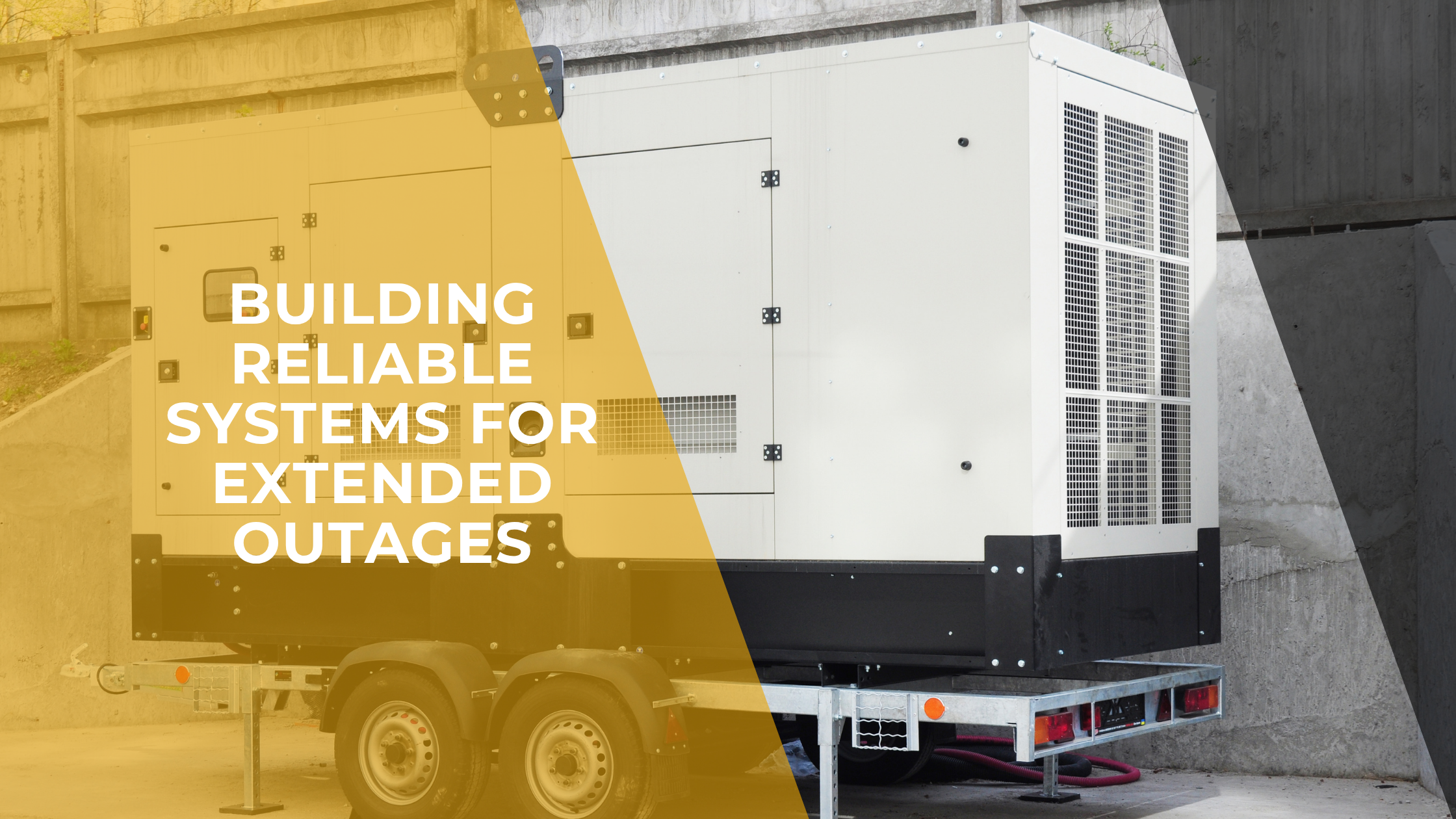
The Emergency Power Supply is the equipment that generates emergency electrical power. Most commonly, this is a diesel, natural gas, or propane generator set. The generator consists of several key components, including the engine, alternator, controls, starting batteries, fuel supply, cooling system, exhaust system, and related accessories. Each part has a specific role. The engine provides mechanical energy. The alternator converts that energy into electrical power. The fuel system must deliver clean, reliable fuel. The battery system must have sufficient charge to start the unit. The cooling system must prevent overheating. The exhaust system must safely remove combustion gases. The controls must start, stop, monitor, and protect the equipment.
When facility teams think only in terms of “the generator,” they can miss the details that make it reliable. For example, a diesel generator may be in good mechanical condition, but if the fuel is contaminated with water, microbial growth, or sediment, it can still fail when needed. A unit may test successfully during a short no-load exercise but develop wet stacking or performance issues if it is never tested under meaningful load. Batteries may appear fine until they are called upon during an actual outage. Cooling system problems may not show up during a short test but become serious during extended operation.
The EPS is the source of emergency power, but it must be maintained as a complete machine. That means more than starting it occasionally. It means looking at fuel, batteries, belts, hoses, fluids, block heaters, coolant, filters, controls, annunciators, exhaust, ventilation, and manufacturer recommendations. A facility manager does not need to become a generator technician, but they do need to know the right questions to ask.
Is the generator sized properly for the current facility load? Has the building changed since the generator was installed? Have new systems been added? Are all critical loads still connected to emergency power? Is fuel quality being tested? Are the batteries being maintained? Is the system load-bank tested when needed? Are test results being documented? Are deficiencies being corrected or simply noted? Those questions are the difference between owning a generator and managing an emergency power asset.
The Emergency Power Supply System: The Complete Path from Outage to Operation
The EPSS includes the EPS and the equipment that transfers, distributes, controls, and monitors emergency power. This is where many facilities have blind spots. The automatic transfer switch (ATS) is one of the most important components in the EPSS. When utility power fails, the ATS detects the loss of normal power and signals the generator to start. Once the generator reaches acceptable voltage and frequency, the ATS transfers the connected load from utility power to emergency power. If the ATS fails, the generator may be running perfectly, but the building may still be without power.
That is why ATS testing and maintenance are critical. Contacts, controls, sensors, timers, relays, bypass isolation features, and mechanical operation all matter. In some facilities, multiple transfer switches may serve different loads. Facility teams need to know which switch serves which system.
Beyond the transfer switch, the EPSS includes distribution panels, breakers, feeders, switchgear, paralleling gear where applicable, load-shedding controls, alarms, and monitoring systems. These components determine which loads receive emergency power and how that power is prioritized. This is especially important in facilities that have grown over time. A building may have started with a simple emergency power design. Over the years, the facility may have added new equipment, expanded production lines, upgraded HVAC, added IT rooms, changed occupancy, or modified life-safety systems. If the EPSS documentation has not kept up, the operations team may not have an accurate understanding of what is protected. That becomes a problem during an outage.
A facility manager may assume that a specific pump, chiller, access control system, freezer, server room, or production line is connected to emergency power, only to discover during an event that it is not. In other cases, too many loads may have been added to the emergency system, creating the risk of overload. Understanding the EPSS means understanding the full path of emergency power from generation to distribution. It also means knowing what is not covered.
NFPA 110 and Why It Matters
NFPA 110, Standard for Emergency and Standby Power Systems, is a primary standard for classifying, designing, installing, testing, and maintaining emergency power systems. It is widely referenced across industries and is especially important for facilities where power failure could pose a life-safety risk. NFPA 110 does not simply require a facility to have a generator. It sets performance requirements for the emergency power supply system (EPSS). These include how quickly power must be available, how long the system must operate, how the system is classified, and how it should be tested and maintained. A key part of NFPA 110 is system classification. EPSS classifications are based on several factors, including level, class, and type.
The level reflects the consequence of failure. A Level 1 system is generally associated with applications where failure could result in loss of human life or serious injury. A Level 2 system is generally associated with applications where failure is less likely to directly threaten life safety but could still create significant hazards, operational disruption, or property loss. The class indicates how long the system is designed to operate without refuelling or external support. This matters because a short outage and a long-duration utility failure are very different events. The type indicates how quickly the EPSS must provide power after the normal source fails. For many critical applications, the expectation is measured in seconds, not minutes. For facility managers, these classifications should not be treated as design language that only engineers understand. They should be part of the facility’s operating knowledge.
If you are responsible for a building, you should know the level, class, and type of your EPSS. You should know which loads are connected. You should know how long the system is expected to operate. You should know how the system is tested. You should know who maintains it. You should know where the documentation lives. You should know what happens if the system fails. This information belongs in the hands of operations leadership, not just in a binder that only gets opened during inspections.
The Risk of Assuming the System Works
Emergency power systems often sit quietly in the background. When they are not needed, they are easy to overlook. That is part of the risk. A generator may run during a monthly test. A transfer switch may operate during a scheduled exercise. The inspection paperwork may look complete. But the real question is whether the system can perform during a true outage, under real load, for the required duration.
Several public studies and emergency preparedness resources highlight the importance of reliable emergency power. FEMA has issued guidance for healthcare facilities on power outages, noting that backup power is a critical part of resilience planning. ASPR TRACIE has compiled utility failure resources and lessons learned for healthcare and emergency planners. The U.S. Department of Health and Human Services Office of Inspector General released a 2026 report that found widespread emergency power system deficiencies in nursing homes, including maintenance gaps and inadequate circuit coverage. The lesson applies beyond healthcare.
When emergency power fails, the issue is often not that a facility lacks a generator. It is that the system was not fully understood, maintained, tested, or aligned with the facility’s actual needs. That should get the attention of every facility and operations manager. The problem may be old equipment. It may be poor documentation. It may be unclear ownership. It may be deferred maintenance. It may be fuel quality. It may be a transfer switch that has not been properly serviced. It may be the assumption that critical loads are covered when they are not. In many cases, the risk is not a single dramatic failure. It is a collection of small gaps that no one owns until the power goes out.
What Facility Managers Should Know About Their EPSS
A strong EPSS program starts with basic system knowledge. Facility managers should be able to answer several practical questions. What type of generator do we have? What fuel does it use? What is the generator’s kW rating? What loads does it serve? What loads are not connected? How many transfer switches are installed? Where are they located? Which systems does each transfer switch serve? When was the last preventive maintenance completed? When was the last load bank test? When was the fuel last tested? Are there open deficiencies? Are repairs documented? Do we have updated one-line diagrams? Do we have an emergency operating procedure? Who is authorized to respond during an outage? Who is our emergency service provider? How quickly can fuel be delivered if the outage is extended?
These are not just technical questions. They are operational questions. If you manage a healthcare facility, the answers may tie directly to compliance and patient safety. If you manage a manufacturing facility, they may determine whether production can continue or whether equipment is damaged by an uncontrolled shutdown. If you manage a commercial property, they may affect tenant safety, security, elevators, access control, fire protection, and communications. If you manage municipal infrastructure, they may affect water, wastewater, public safety, and community services.
In Greenville, where growth is bringing more healthcare, industrial, commercial, and technology-related demand to the region, emergency power planning should be part of facility strategy. It should not be treated as a once-a-year inspection item.
The Importance of Testing and Documentation
Testing is where assumptions get challenged. A no-load exercise can confirm that the generator starts, but it does not prove that the system can carry the facility’s required load. Load bank testing allows the generator to operate under controlled load conditions and can reveal issues that may not appear during light-load operation. Transfer switch testing verifies whether power can move from the normal source to the emergency source. Fuel testing helps confirm whether the fuel supply can support reliable operation. Infrared inspections, breaker maintenance, battery testing, coolant checks, and control system reviews all contribute to system reliability. Documentation is just as important.
If the system is tested but the results are not recorded, the facility loses valuable historical data. If deficiencies are noted but not tracked to completion, risk remains. If drawings are outdated, the operations team may not know what the emergency system supports. If staff changes and system knowledge leaves with one person, the facility becomes vulnerable. A well-managed EPSS program should include current drawings, equipment lists, maintenance records, test reports, deficiency logs, repair history, fuel records, vendor contacts, emergency procedures, and inspection documentation. This information should be easy to access before an outage, not searched for during one.
EPSS Knowledge Is a Leadership Responsibility
The most effective facility leaders do not wait for an emergency to learn about their emergency power system. They walk the system, ask questions, review documentation, and bring in qualified service partners. They ensure that operations, safety, maintenance, security, and leadership understand what the EPSS can and cannot do. They also ensure the system is reviewed when the facility changes. Adding new equipment, expanding square footage, changing occupancy, upgrading HVAC, adding EV charging, installing new production equipment, or expanding IT infrastructure can all affect emergency power needs. If the EPSS is not reviewed as the facility evolves, it may no longer align with the building's risk profile. This is a common issue in older facilities and fast-growing operations. The system that was adequate ten years ago may not be adequate today.
What to Do Next
The first step is not always replacing equipment. Often, the first step is understanding what you already have.
Start with an EPSS review. Identify the generator, transfer switches, distribution equipment, connected loads, fuel system, maintenance history, testing records, open deficiencies, and documentation gaps. Confirm that the system aligns with NFPA 110 requirements where applicable. Review whether the system supports your operational priorities. Ensure your emergency plan reflects the actual system, not assumptions. From there, build a practical maintenance and testing plan.
For some facilities, that may mean more consistent preventive maintenance. For others, it may mean fuel testing, load bank testing, ATS service, documentation updates, or a review of emergency load coverage. In some cases, it may mean planning for upgrades, temporary power connections, rental generator contingency planning, or fuel resiliency. The goal is not to make the system more complicated. The goal is to make the system more reliable.
Final Thought
Your EPSS is not just a generator. It is a coordinated system designed to detect a power loss, produce emergency power, transfer critical loads, distribute electricity safely, and keep essential operations running.
For Greenville facility managers and operations leaders, understanding that the system is part of protecting people, property, productivity, and compliance. The time to learn what your emergency power system can do is not during an outage. The time to understand it is now. A well-maintained generator matters. A tested transfer switch matters. Clean fuel matters. Accurate documentation matters. Proper load coverage matters. Trained staff matters. Reliable service support matters. When the utility fails, every component has a job to do. The facilities that perform best are the ones that know their system before they need it.
-1.png)
.png)
.png)
.png)